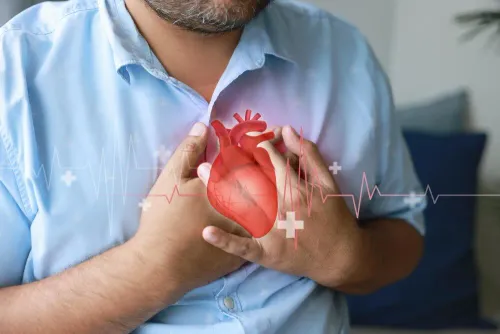

Chest pain can reflect a blocked heart artery, a lung emergency, reflux, muscle injury, or another condition that needs a different response. You will learn when to call 112, what happens during the first assessment, how doctors distinguish causes, and what treatment or follow-up may come next.
Key takeaways
- Call 112 for chest pain with breathlessness, sweating, fainting, or pain spreading to the jaw or arm.
- Expect an ECG, vital-sign checks, and blood tests during the first assessment.
- Do not assume burning chest pain is acidity until dangerous causes are excluded.
- Choose follow-up care after emergency causes are assessed and your test results are explained.
When chest pain requires 112 rather than an appointment
Pressure, squeezing, heaviness, or burning lasting more than a few minutes needs emergency action, especially when it spreads to an arm, jaw, back, or shoulder. Breathlessness, sweating, nausea, fainting, or sudden weakness make the pattern more concerning for a heart attack or another life-threatening condition.
Women, older adults, and people with diabetes may have less typical symptoms. Unusual fatigue, dizziness, upper-abdominal discomfort, nausea, breathlessness, or back pain can signal a heart attack even without severe central chest pain.
- Stop exertion immediately and sit or lie down.
- Call 112 in India and describe the symptoms, when they began, and your location.
- Use an ambulance rather than driving yourself; emergency crews can begin assessment during transport.
- Follow the dispatcher’s instructions and keep your phone available.
Emergency action takes priority over booking chest pain treatment in Navi Mumbai when pain is severe, new, persistent, or paired with these warning signs. Do not wait to see whether rest makes it disappear.
Emergency services or a clinician may advise aspirin after checking for aspirin allergy, active bleeding, blood-thinning medicines, and other risks. Do not take it on your own when a clinician has told you to avoid it, and remember that aspirin does not replace urgent assessment.
What happens during the first chest pain assessment
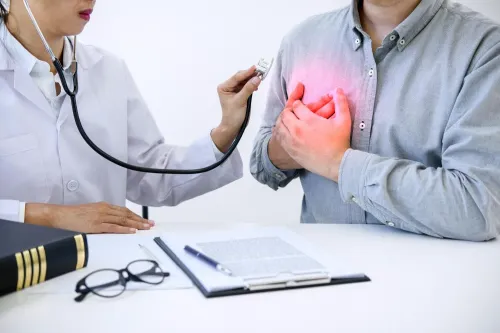
The assessment starts with a focused history, not a guess based on pain location. Tell the clinician exactly when it began, how long each episode lasts, whether it has recurred, what exertion triggers it, whether rest relieves it, and whether it feels like pressure, squeezing, heaviness, burning, stabbing, or tightness.
The team will ask about:
- Spread to the arm, jaw, back, or shoulder, plus breathlessness, sweating, nausea, fainting, or weakness
- Previous heart disease, diabetes, high blood pressure, high cholesterol, smoking, and family history of early heart disease
- Every current medicine, including dose, aspirin, blood thinners, and non-prescription drugs
- Blood pressure, pulse, oxygen saturation, and temperature
- A physical examination, including heart and lung sounds, circulation, chest-wall tenderness, and signs of fluid overload
A 12-lead ECG records the heart’s electrical activity and can show reduced blood flow or an acute coronary syndrome. It should be obtained and interpreted within 10 minutes of arrival when acute coronary syndrome is suspected. High-sensitivity cardiac troponin is a blood test for myocardial injury.
One normal ECG or troponin does not always exclude a heart attack, so continuing symptoms or persistent concern may require repeat ECGs, serial troponin after roughly 1 to 3 hours depending on the assay, or observation before cardiac chest pain care is decided.
How doctors separate heart pain from other dangerous and common causes
A chest pain doctor in Navi Mumbai compares the symptom pattern with examination findings, vital signs, ECG, troponin results, and risk factors rather than relying on pain location alone.
| Condition | Typical pattern | What it means |
|---|---|---|
| Stable angina | Predictable discomfort during exertion that settles with rest | Reduced blood flow requiring prompt medical review |
| Unstable angina | New, worsening, occurring with less activity, or appearing at rest | Emergency assessment because the pattern can precede a heart attack |
| Myocardial infarction | Symptoms plus changing troponin levels and other ECG, imaging, or examination findings | Heart-muscle injury requiring urgent treatment |
Doctors also check for aortic dissection, which can cause sudden severe tearing pain; pulmonary embolism, which may cause chest pain with breathlessness or a fast pulse; tension pneumothorax, which can produce one-sided pain, severe breathlessness, and low blood pressure; and pericardial tamponade, where fluid around the heart restricts filling.
Reflux can cause burning pain, while muscle or rib strain and costochondritis can cause local tenderness. Lung disease, panic symptoms, and shingles are other possibilities; shingles pain may precede its rash.
Pain worsened by movement or pressing the chest suggests a musculoskeletal cause, but it does not safely rule out cardiac disease in a high-risk patient. Doctors therefore test before labelling symptoms as acidity, anxiety, or a pulled muscle.
Which tests and treatments follow the initial results
Serial high-sensitivity troponin shows whether heart-muscle injury is changing. A rise or fall supports an acute process; a stable, low result after the required testing interval supports lower risk. Echocardiography checks pumping strength, regional wall-motion abnormalities, valve disease, fluid around the heart, and complications such as heart failure.
| Test | What it shows | When it applies |
|---|---|---|
| Stress test or stress imaging | How the heart performs under exertion or medicine-induced stress | Selected stable or intermediate-risk patients |
| CT coronary angiography | Coronary narrowing without catheterisation | Intermediate-risk patients when image quality and kidney function permit |
| Invasive coronary angiography | Direct coronary images and a route to treatment | When the result will guide urgent PCI or another intervention |
Treatment follows the diagnosis, not the pain score alone:
- Selected low-risk or stable cases: rest, exercise advice, and control of blood pressure, diabetes, cholesterol, weight, and smoking.
- Clinically appropriate ischaemia: medicines such as nitrates or antiplatelet therapy, prescribed after contraindications are checked.
- Established reflux, respiratory disease, or musculoskeletal pain: treatment directed at that cause.
- Confirmed acute coronary syndrome: urgent reperfusion, antiplatelet and anticoagulant treatment, and coronary intervention when indicated.
Kidney function affects contrast and drug choices. Bleeding risk affects antiplatelet and anticoagulant use. ECG findings help determine urgency, while timely PCI availability can decide whether immediate catheter treatment or transfer is needed.
Choosing follow-up care in Belapur after emergency causes are assessed
A planned consultation is appropriate when pain is recurrent or exertional, settles with rest, and you are stable after emergency warning signs have been excluded. Chest pain treatment Belapur can involve a specialist clinic in this situation, but active severe, new, persistent, or worsening symptoms require an ambulance or emergency department, not an appointment.
| Situation | Next step | Reason |
|---|---|---|
| Stable, recurrent or exertional pain after triage | Book planned cardiology follow-up | Angina still needs assessment and risk reduction |
| Severe or persistent pain, breathlessness, sweating, fainting, or spreading pain | Call 112 and use an ambulance | Emergency treatment takes priority |
Bring these records to your appointment:
- Symptom timeline, including onset, duration, triggers, and relief
- ECG, troponin, and other blood-test reports
- Discharge papers
- Medicine list with doses and allergy history
- Home blood-pressure readings
- Details of diabetes, cholesterol, smoking, or previous procedures
Heart Fitt Cardiac Wellness Clinic in Belapur, Navi Mumbai is one local option for discussing next-step evaluation and longer-term risk management after appropriate triage.
Ask a heart pain specialist near me:
- What diagnosis are you considering?
- Which test answers which question?
- When should I return urgently?
- How will exercise, smoking, blood pressure, diabetes, cholesterol, sleep, rehabilitation, and medication adherence be managed?
Recurrent exertional pain deserves prompt review even when it stops with rest; stable angina can progress.
Related services
Chest Pain Treatment at Heart Fitt Cardiac Wellness Clinic, Belapur (Navi Mumbai) Dr. View service → |
Angina Treatment At Heart Fitt Cardiac Wellness Clinic, Dr. Charan Reddy provides expert diagnosis and treatment for angina (chest pain caused by reduced blood flow... View service → |
Frequently asked questions
When should you call 112 for chest pain in Navi Mumbai?
Call 112 for pressure, squeezing, heaviness, or burning lasting more than a few minutes, especially with pain spreading to an arm, jaw, back, or shoulder. Breathlessness, sweating, nausea, fainting, or sudden weakness also require emergency action.
What happens during the first chest pain assessment?
Doctors check your symptoms, vital signs, medical history, and risk factors. They commonly perform an electrocardiogram and order blood tests to look for signs of heart muscle injury.
How do doctors distinguish heart pain from other causes?
They assess the pain’s location, quality, duration, triggers, and associated symptoms, then combine those findings with examination results and tests. This helps separate cardiac causes from lung, digestive, muscle, and other conditions.
Which tests and treatments can follow the initial results?
Further care depends on the first assessment. Doctors may repeat ECGs or cardiac blood tests and order imaging or stress testing. Treatment can include emergency cardiac medicines, observation, referral, or care for a non-cardiac cause.
How do you choose follow-up chest pain care in Belapur?
After emergency causes are assessed, choose a chest pain doctor in Navi Mumbai who explains the results, identifies remaining risks, provides a medication and activity plan, and schedules appropriate follow-up.
Related services
Heart Attack Treatment Dr. Charan Reddy provides prompt and advanced heart attack treatment at Heart Fitt Cardiac Wellness Clinic, Belapur, Navi Mumbai. View service → |
Cardiac Care Treatment At Heart Fitt Cardiac Wellness Clinic in Belapur, Navi Mumbai, Dr. View service → |
Keywords