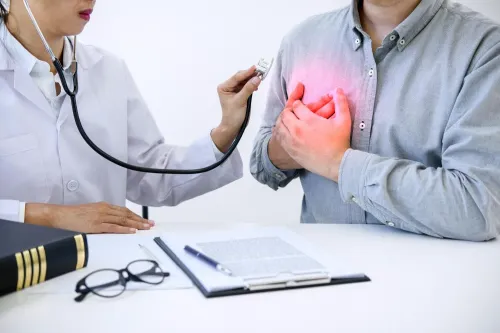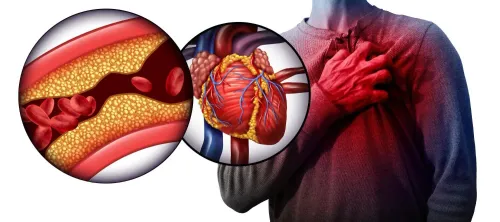

Chest pressure, tightness, heaviness or squeezing that appears with exertion can signal angina, but pain at rest, a new pattern or symptoms lasting longer than usual require emergency action. You will be able to distinguish common angina patterns, respond safely during an episode, understand the tests used, and choose appropriate cardiac care in Belapur or Navi Mumbai.
Key takeaways
- Call 112 for new, severe, prolonged, or spreading chest pain.
- Stable angina follows a predictable exertion-related pattern and eases with rest.
- ECG and blood tests help identify an acute heart problem quickly.
- Treatment combines symptom relief with medicines and risk-factor control.
How to Tell Stable Angina from Dangerous or Non-Cardiac Chest Pain
Stable angina follows a repeatable pattern: pressure, tightness or heaviness appears with walking, climbing stairs or emotional stress, lasts a few minutes, and improves with rest or prescribed glyceryl trinitrate (GTN). Breathlessness, fatigue, sweating or discomfort spreading to the arm, jaw, back or shoulder can accompany it.
Unstable angina breaks that pattern. New pain, pain that is worsening, lasts longer than usual, occurs with less exertion or starts at rest may indicate acute coronary syndrome. Treat it as an emergency, even if earlier tests were reassuring.
- Vasospastic angina often strikes at rest, particularly overnight or in the early morning, and may come in brief episodes. A coronary artery temporarily narrows; exertion is not required.
- Microvascular angina can occur during activity or rest, lasts longer, and causes less predictable pressure, breathlessness or unusual fatigue. Standard nitrate relief is not always complete.
- Non-cardiac pain is more suggestive when it is sharp and clearly worsens with a breath, cough, movement or pressing the chest, or feels burning after meals. These clues do not safely rule out heart disease.
Call 112 rather than arranging routine angina treatment in Belapur if chest pain lasts more than five minutes, occurs at rest, worsens, or comes with severe breathlessness, fainting, sweating, nausea or spreading pain.
Use GTN only as prescribed. Never combine it with sildenafil, tadalafil or vardenafil; disclose these medicines before receiving nitrates.
What to Do During Chest Pain and When to Call 112
Stop exertion immediately, sit upright, and stay still. If you have prescribed short-acting glyceryl trinitrate (GTN) or nitroglycerin, use it exactly as your prescription says. Do not keep repeating doses after the instructed limit. Never combine GTN with sildenafil, tadalafil, or vardenafil; the combination can cause a dangerous blood-pressure drop. Do not drive yourself.
- Call 112 for chest pain lasting more than five minutes, pain occurring at rest, or pain that is new, worsening, or less predictable than usual.
- Call 112 for severe breathlessness, fainting, cold sweating, nausea, or pain spreading to your arm, jaw, back, or shoulder.
- Unlock the door, keep your phone nearby, and follow the dispatcher’s instructions while waiting.
| Situation | Action | Why |
|---|---|---|
| Familiar, brief pain after a known trigger that settles with rest or prescribed GTN | Arrange prompt outpatient review with an angina doctor in Belapur | The pattern may be stable, but it still needs assessment |
| New pain, worsening pain, pain at rest, or pain that does not settle as instructed | Call 112 for an ambulance, not a clinic appointment | These features can indicate acute coronary syndrome |
| Emergency assessment | Ask for a 12-lead ECG as soon as possible; clinicians may repeat ECGs and troponin tests | Acute coronary syndrome requires monitoring and rapid treatment; ECG interpretation is recommended within 10 minutes of first medical contact |
Which Tests Confirm the Cause and How Quickly Are They Done?
New, worsening, or rest-related pain needs emergency assessment, not a routine angina appointment. Clinicians obtain and interpret a 12-lead ECG within 10 minutes of first medical contact when acute coronary syndrome is suspected, then use monitoring and repeat high-sensitivity troponin blood tests to detect heart-muscle injury. Do not wait for fasting.
| Test or situation | How quickly it is done | Preparation |
|---|---|---|
| Emergency ECG | Immediately; repeat if symptoms or findings change | No preparation; sit still while electrodes are attached |
| Serial troponin | First sample promptly, with repeat samples over the next hours | No fasting; report kidney disease and previous heart problems |
| Echocardiogram | Same day when urgent, or scheduled for stable symptoms | Wear clothing that permits chest access; no fasting |
| Exercise stress test | Scheduled after emergency causes are excluded | Wear walking shoes, avoid a heavy meal, and ask which medicines to take or pause |
| CT coronary angiography | Scheduled or urgent according to risk | Follow fasting instructions; report contrast allergy, kidney disease, pregnancy, and medicines |
| Coronary angiography | Urgent when a blocked artery is strongly suspected | Follow fasting and medicine instructions; disclose allergies and kidney disease |
For predictable, exertion-related symptoms, clinicians combine history, examination, ECG, blood pressure, cholesterol and glucose tests with echocardiography or stress imaging. A centre providing angina treatment in Navi Mumbai should explain whether it can perform immediate ECG, serial troponin testing, continuous monitoring, and rapid transfer for invasive cardiology.
Tell clinicians about sildenafil, tadalafil, or vardenafil before receiving nitrates; combining them with GTN or nitroglycerin can cause a dangerous blood-pressure drop.
How Angina Treatment Relieves Symptoms and Reduces Future Risk
Treatment has two jobs: stop angina during activity and lower the chance of heart attack. Your clinician chooses medicines based on symptoms, blood pressure, heart rate, kidney function, other conditions and test results.
- Nitrates: prescribed nitroglycerin can relax coronary arteries and relieve an episode. Never combine nitrates with sildenafil, tadalafil or vardenafil; the combination can cause a dangerous blood-pressure drop.
- Beta blockers: these slow the heart and reduce its oxygen demand.
- Calcium-channel blockers or long-acting nitrates: these prevent episodes when a beta blocker is unsuitable or insufficient.
- Antiplatelet medicines and statins: these reduce clotting risk and LDL cholesterol when prescribed for your cardiovascular risk.
Lifestyle treatment supports every medication plan:
- Stop smoking and avoid tobacco exposure.
- Follow a heart-healthy eating pattern with less salt, saturated fat and processed food.
- Reach and maintain a healthy weight.
- Control blood pressure, diabetes and LDL cholesterol.
- Build regular, clinician-approved activity or cardiac rehabilitation into your week. Do not begin high-intensity exercise before unstable symptoms have been assessed.
Revascularization is not automatic for stable angina. Coronary angioplasty with stent placement is considered when symptoms remain limiting despite medical treatment, or when testing shows important narrowing with substantial ischemic risk. Coronary bypass surgery may suit complex or extensive coronary disease.
The decision weighs expected symptom and survival benefit against procedural risk, anatomy and overall health.
Choosing Cardiac Care in Belapur for Assessment and Follow-Up
Choose routine outpatient care only when your pain follows its established pattern, settles with prescribed treatment, and is not becoming more frequent or severe. A search result for an angina specialist near me does not prove that a clinic can handle an acute coronary syndrome.
| Care setting | What to verify | When it applies |
|---|---|---|
| Routine cardiology clinic | Appointment-based examination, medication review, risk-factor management, and planned testing | Predictable symptoms without new or worsening features |
| Same-day cardiac assessment | Access to an ECG and a clear escalation plan if the result or symptoms are concerning | New symptoms that are not severe but differ from your usual pattern |
| Emergency cardiac evaluation | A 12-lead ECG within 10 minutes of first medical contact, serial troponin testing, continuous monitoring, and rapid transfer to invasive cardiology | Pain at rest, worsening or prolonged pain, severe breathlessness, fainting, sweating, nausea, or pain spreading to the arm, jaw, back, or shoulder |
Ask any Belapur clinic who performs the ECG, where serial troponin testing occurs, and which hospital receives patients needing angiography or angioplasty. Heart Fitt Cardiac Wellness Clinic can be considered for planned evaluation when its current testing and transfer arrangements match your needs.
Do not book a routine visit for new, worsening, or rest-related pain. If prescribed GTN does not relieve the episode according to your instructions, call 112 rather than taking repeated doses; never combine nitrates with sildenafil, tadalafil, or vardenafil.
Related services
Angina Treatment At Heart Fitt Cardiac Wellness Clinic, Dr. Charan Reddy provides expert diagnosis and treatment for angina (chest pain caused by reduced blood flow... View service → |
Chest Pain Treatment at Heart Fitt Cardiac Wellness Clinic, Belapur (Navi Mumbai) Dr. View service → |
Frequently asked questions
How can you tell stable angina from dangerous chest pain?
Stable angina follows a repeatable pattern during exertion or emotional stress and improves with rest or prescribed GTN. New, worsening, prolonged, or unexplained pain needs urgent assessment, especially with sweating, breathlessness, faintness, nausea, or pain spreading to the arm, jaw, back, or shoulder.
What should you do during chest pain, and when should you call 112?
Stop activity, sit down, and use prescribed GTN exactly as directed. Call 112 for severe or new pain, pain that does not settle promptly, or symptoms such as breathlessness, sweating, faintness, or spreading discomfort. Do not drive yourself.
Which tests help confirm the cause of chest pain?
An ECG is an immediate first test. Clinicians may add serial high-sensitivity troponin blood tests, echocardiography, stress testing, CT coronary angiography, or invasive coronary angiography based on your symptoms and initial results.
How does angina treatment reduce future heart risk?
Treatment can combine anti-anginal medicines, antiplatelet or cholesterol-lowering medicines when indicated, blood-pressure and diabetes management, smoking cessation, exercise guidance, and treatment of significant coronary artery narrowing.
Keywords