Chest pain, an abnormal stress test or suspected heart attack can lead to a recommendation for coronary angiography, but the test does not automatically mean you need a stent. You will learn how the catheter test works, when doctors choose it over other heart tests, how to prepare, and how to judge whether a same-day treatment or a different approach is appropriate.
Key takeaways
- Angiography shows artery narrowing; it does not automatically remove a blockage.
- Ask about kidney function, contrast allergy, fasting, and medicines before the test.
- Angioplasty and a stent are separate treatments decided after angiography findings.
- Call emergency services for severe chest pain, breathlessness, sweating, or fainting.
How coronary angiography finds a blockage
Coronary angiography is a diagnostic X-ray test, not a procedure that automatically removes a blockage. The phrase “heart angiography in Navi Mumbai” usually refers to this catheter-based examination, which uses iodinated contrast dye to outline the coronary arteries.
You remain awake while the cardiologist numbs the skin with local anaesthetic. A thin catheter enters an artery in your wrist or groin and is guided under X-ray to the heart. The doctor injects contrast through the catheter and records moving X-ray images as the dye travels through the coronary arteries.
You may feel brief warmth or flushing when the dye enters.
The images show the inside width of each visible coronary artery. A narrowed segment indicates reduced space for blood flow, and the angiogram helps locate the narrowing, estimate its severity, and identify whether one or several arteries are involved.
It does not show every problem: a normal or non-obstructive result does not rule out coronary microvascular dysfunction or vasospastic angina.
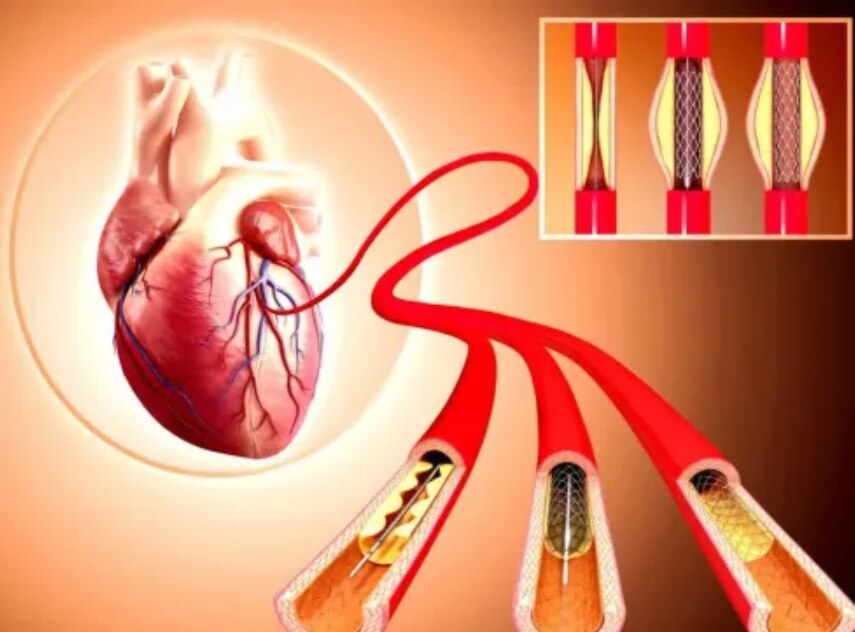
Angiography itself does not clear the artery. If the findings and your clinical condition support treatment, the cardiologist may perform angioplasty and place a stent during the same catheterisation visit. That decision depends on the blockage’s location and complexity, kidney function, bleeding risk, symptoms, and whether bypass surgery would offer a better result.
When angiography is the right heart test
An invasive coronary angiogram is the right choice when the cardiologist needs a definitive view of the coronary artery lumen, especially when symptoms are persistent, an exercise test is abnormal, or non-invasive results conflict. It also permits immediate pressure measurements and, when a suitable severe narrowing is found, angioplasty during the same catheterisation.
| Test | What it can answer | Why it may not replace angiography |
|---|---|---|
| ECG | Shows electrical changes, including signs of an acute heart attack | A normal ECG does not rule out a coronary blockage |
| Echocardiogram | Shows pumping strength, valves and regional wall-motion changes | It does not directly display the coronary artery openings |
| Treadmill test | Shows how exercise affects symptoms, ECG changes and capacity | An abnormal result indicates risk but does not map the narrowing precisely |
| CT coronary angiography | Provides non-invasive images of coronary arteries | Heavy calcification, fast or irregular heart rhythms, kidney disease or unclear images can limit its usefulness |
| Cardiac MRI | Assesses heart muscle, scar, inflammation and blood flow | It is not usually the fastest route to a treatable artery blockage |
For pressure or pain lasting several minutes, pain spreading to the arm, jaw or back, sweating, nausea or breathlessness, call emergency services rather than searching for an angiography provider. The urgent pathway may include an ECG, serial blood tests and emergency angiography.
A non-obstructive angiogram also does not make symptoms imaginary; coronary spasm or microvascular dysfunction can require further evaluation.
What to check before the procedure and after discharge
Preparation starts with a medication and medical-history check, not with fasting alone. Tell the cardiology team about:
- Previous reaction to iodinated contrast
- Kidney disease, diabetes, bleeding disorders or possible pregnancy
- Every medicine and supplement, especially anticoagulants, antiplatelet medicines and diabetes medicines
- Any recent illness or previous difficulty with anaesthesia
Follow the team’s exact instructions about fasting, medication changes and kidney-protection measures. Do not copy another patient’s instructions; stopping an anticoagulant or diabetes medicine without advice can cause harm.
After discharge, bruising and tenderness at the wrist or groin are common. Contrast can also cause a brief warm or flushed sensation during injection.
| Finding | Usually expected | Needs urgent medical assessment |
|---|---|---|
| Access site | Small bruise, mild tenderness or a small stable lump | Heavy bleeding, rapidly enlarging swelling, severe pain, or bleeding that does not stop with firm pressure |
| Hand or leg | Normal colour, warmth and movement | Coldness, numbness, marked weakness or loss of circulation |
| General symptoms | Brief fatigue or mild soreness | Chest pain, breathlessness, fainting, facial swelling, widespread rash, new weakness or trouble speaking |
Contact the treating team about worsening redness, drainage, fever or increasing pain at the puncture site. Call emergency services for chest pressure lasting several minutes, pain spreading to the arm, jaw or back, sweating, nausea or breathlessness; do not delay for an online search.
When angiography leads to angioplasty and a stent
Yes. A cardiologist can perform angioplasty and place a stent during the same catheterisation session as diagnostic angiography when the blockage is suitable and you have given consent.
Angiography itself does not remove plaque; it shows the artery, after which the team chooses treatment based on the narrowing’s location, length, number, kidney function, bleeding risk and your overall condition.
| Option | What it means | When it applies |
|---|---|---|
| Same-session angioplasty and stent | A balloon opens the narrowing, followed by a mesh stent | One or a few accessible blockages need immediate treatment |
| Staged angioplasty | Treatment occurs during a later planned procedure | The disease is extensive, the procedure is lengthy, or more assessment is needed |
| Bypass surgery or medicines | Surgery reroutes blood flow, or medication manages the condition without a stent | Multiple complex blockages, unsuitable anatomy, or narrowing that does not justify intervention |
Before choosing an angiography service, ask these questions:
- Is an interventional cardiologist available on site?
- Does the centre provide 24-hour emergency cover when needed?
- What is the transfer plan if you need bypass surgery or intensive care?
- How are kidney function, contrast reactions and catheter-site bleeding assessed and managed?
A search for “angiography treatment in belapur,” “angiography doctor belapur” or “angiography near me” does not prove that a facility can perform emergency stenting. Heart Fitt Cardiac Wellness Clinic can be one provider to question about its referral and emergency arrangements, rather than assuming every advertised service offers the same level of care.
If chest pressure lasts several minutes or comes with sweating, nausea, breathlessness, or pain spreading to your arm, jaw or back, call emergency services. Do not spend time comparing clinics online.
Related service
Angiography Treatment Angiography is a specialized diagnostic procedure used to evaluate blockages or narrowing in the heart’s blood vessels. View service → |
When chest pain requires emergency care
Chest pressure or pain lasting several minutes, returning after easing, or spreading to the arm, jaw, back or shoulder needs emergency assessment. Call your local emergency number for an ambulance. Do not drive yourself or spend time searching for “angiography doctor Belapur,” “heart angiography in Navi Mumbai” or “angiography near me.”
Treat these symptoms as warning signs:
- Sweating, nausea or vomiting with chest discomfort
- Shortness of breath, faintness or sudden extreme weakness
- Chest pain that starts at rest or worsens quickly
- New discomfort in a person with diabetes, known heart disease or previous heart attack
The emergency team can monitor you during transport and take you to a facility prepared for acute coronary syndrome. Assessment may include an ECG, repeated blood tests for heart injury and urgent cardiology review; emergency coronary angiography follows when the findings indicate it.
An online listing may describe a diagnostic service but not provide 24-hour emergency cover, interventional cardiology, bleeding management or a rapid transfer route for angioplasty, stenting or surgery.
Do not dismiss pain because a later angiogram shows no major fixed blockage. Coronary artery spasm and coronary microvascular dysfunction can cause genuine symptoms without an obvious obstruction and need further medical evaluation. A normal result is not permission to ignore recurring or worsening chest pain.
Frequently asked questions
How does coronary angiography find a blockage?
A cardiologist guides a catheter through an artery, injects iodinated contrast dye, and uses X-ray images to show narrowed or blocked coronary arteries.
When is angiography the right heart test?
It is used when symptoms, ECG results, stress testing, or an emergency heart attack assessment indicates that coronary arteries need direct evaluation.
What should you check before angiography?
Tell the team about kidney disease, previous contrast reactions, diabetes, pregnancy, and every medicine you take. Follow the hospital’s fasting and medication instructions.
Does angiography always lead to angioplasty and a stent?
No. Angioplasty and stenting are separate decisions based on the blockage’s location, severity, symptoms, and overall heart risk.
When does chest pain require emergency care?
Seek emergency help for pressure or pain lasting several minutes, especially with breathlessness, sweating, nausea, fainting, or pain spreading to the arm, back, neck, or jaw.
Keywords