
An ECG and an echocardiogram are worth paying for when each test answers a different clinical question, but neither belongs in a self-booked package when chest symptoms could signal an emergency. You will be able to match symptoms and findings to the right test, understand what the appointment involves, and compare cost and reporting quality before you book.
Key takeaways
- ECG checks electrical rhythm; an echo examines heart structure and pumping.
- Chest pain, palpitations, fainting, and irregular pulse often start with an ECG.
- Breathlessness, swelling, murmurs, and suspected valve disease point toward an echo.
- Normal ECG and echo results do not rule out every cause of symptoms.
When do you need an ECG, an echo, or both?
An ECG is usually the first test for chest discomfort, palpitations, fainting, an irregular pulse, or suspected rhythm trouble. An echocardiogram is more useful for a murmur, unexplained breathlessness, leg swelling, suspected heart failure, valve disease, or an abnormal ECG suggesting structural disease.
A search for heart test for chest symptoms Belapur should not lead you to self-book a routine package when symptoms are active. Call emergency services or go to an emergency department for chest pressure or pain with breathlessness, sweating, fainting, nausea, or pain spreading to the arm, jaw, or back.
Acute coronary syndrome needs immediate examination, ECG, and serial high-sensitivity troponin tests; a normal first ECG does not safely exclude it.
Test choice depends on the clinical question:
| Test | Findings that support it | Usual role |
|---|---|---|
| ECG | Chest discomfort, persistent palpitations, fainting, irregular pulse, abnormal blood pressure, or suspected rhythm problem | Measures electrical activity and rhythm |
| Echocardiogram | Murmur, breathlessness, swelling, suspected valve disease, heart failure, or structural abnormality | Examines chambers, valves, blood flow, and pumping function |
| Both | Symptoms plus an abnormal examination or ECG, suspected heart failure, valve disease, or cardiomyopathy | Combines electrical and structural information |
| Neither | Mild, brief symptoms with no concerning findings after clinical assessment | Treats the likely non-cardiac cause or monitors symptoms |
Neither test alone explains every chest pain episode. Intermittent palpitations may require a Holter monitor, while suspected coronary artery disease may need stress testing or coronary imaging.
What extra information does each test provide?
A resting ECG records the heart’s electrical activity for a few seconds. It can show rhythm, conduction delays, heart rate, and electrical patterns linked with strain or a previous heart attack. A standard echocardiogram uses ultrasound to show the heart’s chambers, pumping movement, valves, and blood flow.
| Test | Main information | What it can miss |
|---|---|---|
| ECG | Rhythm, rate, conduction, and electrical patterns | Structural problems and intermittent arrhythmias absent during the recording |
| Standard echocardiogram | Chamber size, ejection fraction, valve function, wall movement, and Doppler blood flow | Brief rhythm disturbances and many causes of blocked coronary arteries |
Ordering both is useful when the clinical question covers electricity and structure. Breathlessness with an abnormal ECG, a heart murmur with palpitations, fainting with suspected valve disease, or suspected heart failure are examples. The ECG may identify an abnormal rhythm while the echo explains whether the heart muscle, chambers, or valves are affected.
One normal result does not make the other unnecessary. A normal ECG cannot confirm normal pumping or valves, while a normal echo does not exclude an intermittent rhythm problem or coronary artery disease. A single ECG can miss palpitations that occur outside the appointment; prolonged monitoring may then be more informative.
If you search “ecg and echo test belapur,” choose testing based on the clinician’s question, not a package price. Active chest pressure, sweating, fainting, severe breathlessness, or pain spreading to the arm, jaw, or back needs emergency assessment rather than routine booking.
What happens during an ECG and 2D echocardiogram?
You usually need no fasting or special preparation for a resting ECG or transthoracic 2D echocardiogram. Take regular medicines unless the referring clinician gives different instructions, and wear a two-piece outfit that allows access to your chest.
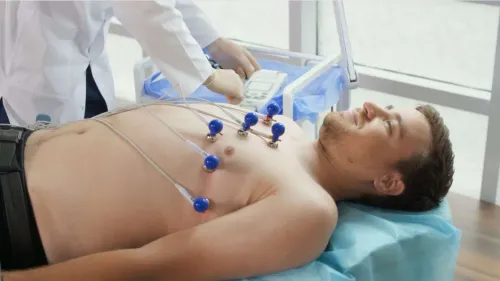
1. For an ECG, you lie still on your back while a technician attaches small adhesive electrodes to your chest, arms, and legs. The machine records electrical activity for about 5 to 10 minutes. You may feel a brief tug when the stickers come off, but the test is painless and does not deliver electricity.
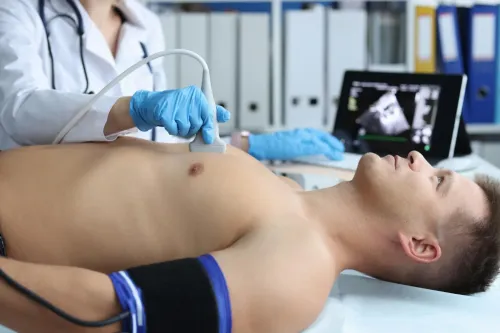
2. For a 2D echo, you usually remove clothing above the waist and lie on your left side. The sonographer applies warm gel and moves a handheld probe over your chest to create moving images of the heart, valves, blood flow, and pumping action.
Pressure from the probe can feel uncomfortable over a tender area, but it should not hurt. Allow about 20 to 45 minutes.
3. Both tests use no radiation. Tell the technician if you have sensitive skin, chest pain, or difficulty lying flat. You can sit up, dress, eat, drive, and return to normal activities immediately afterward.
An ECG and echo test in Navi Mumbai follows the same basic process. Ask when the written report will be available and whether a clinician will interpret it.
What can normal results miss?
A normal ECG records electrical activity only during those few seconds; if your rhythm is normal during the appointment, an intermittent arrhythmia leaves no trace. A normal echo can show normal pumping and valves while missing pain caused by temporary reduced blood flow in a coronary artery.
Active chest pressure or pain, breathlessness, sweating, fainting, or pain spreading to your arm, jaw, or back needs emergency assessment, not a routine appointment. A normal first ECG does not safely exclude acute coronary syndrome; clinicians use immediate ECG, serial high-sensitivity troponin testing, and examination.
After the initial assessment, further testing depends on the unanswered question:
- For palpitations that come and go, a Holter monitor, event recorder, or patch recorder can capture the rhythm during symptoms.
- For suspected coronary artery disease, a clinician may consider stress imaging, CT coronary angiography, or invasive coronary angiography. A resting echo is not a general test for blocked arteries.
- For fainting, breathlessness, an abnormal ECG, or a murmur, an echo can still add structural and valve information even when the ECG is normal.
If you searched for ecg and echo test belapur, choose testing after a clinician reviews your symptom pattern and risk factors, rather than booking the cheapest package. The right test must answer the suspected problem; normal results reduce concern about specific findings but do not explain every cause of chest pain or palpitations.
How should you compare ECG and echo testing in Belapur?
Compare the quoted ecg 2d echo cost belapur by scope, reporting, and supervision—not by the lowest number. Ask whether the price covers a resting ECG, 2D echocardiogram with Doppler, written reports, clinician interpretation, consultation, and any repeat or urgent-care fee.
| Test | Check in the report | Why it matters |
|---|---|---|
| ECG | Rhythm, rate, electrical interpretation, and recording quality | An unexplained abnormality can require clinical review or monitoring |
| 2D echo | Chamber measurements, ejection fraction, valve findings, Doppler results, and image quality | A limited ultrasound window can reduce confidence in a normal-looking result |
| Both | Interpreting clinician’s name, qualifications, signature, and clinical correlation | The tests answer different questions and should match the suspected problem |
Before booking an ecg echo test in navi mumbai, ask these specific questions:
- Is the echocardiogram standard 2D imaging only, or does it include colour and spectral Doppler?
- Who performs and reports each test?
- Will a cardiologist explain an abnormal result and recommend the next step?
- Does the quote include consultation, printed or digital reports, and repeat testing if the first echo is technically limited?
Heart Fitt Cardiac Wellness Clinic can be compared on these same details: ask how the requested tests relate to your symptoms, examination findings, and the question your clinician is trying to answer.
If you have chest pressure, breathlessness, sweating, fainting, or pain spreading to your arm, jaw, or back, do not shop for a routine package; seek emergency assessment instead.
Related service
ECG & Echo Test Treatment Dr. Charan Reddy at Heart Fitt Cardiac Wellness Clinic, Belapur, Navi Mumbai offers accurate and reliable ECG and Echo Test services for early... View service → |
Frequently asked questions
When do you need an ECG, an echo, or both?
An ECG is usually used first for chest discomfort, palpitations, fainting, irregular pulse, or suspected rhythm problems. An echo helps assess murmurs, unexplained breathlessness, leg swelling, suspected heart failure, valve disease, or structural abnormalities suggested by an ECG. Your symptoms and examination determine whether you need one test or both.
What extra information does an ECG provide compared with an echo?
An ECG records the heart’s electrical activity, including rate, rhythm, conduction changes, and patterns that can suggest strain or previous damage. An echocardiogram uses ultrasound to show chamber size, wall motion, pumping function, valves, blood flow, and fluid around the heart.
What happens during an ECG and 2D echocardiogram?
For an ECG, staff place adhesive electrodes on your chest and limbs while you lie still; recording usually takes a few minutes. During a 2D echocardiogram, a sonographer applies gel and moves an ultrasound probe across your chest while images and blood-flow measurements are recorded. Neither test uses needles or radiation.
What can normal ECG and echo results miss?
Normal results do not exclude every cause of chest symptoms, palpitations, breathlessness, or fainting. Intermittent rhythm problems can occur outside a brief ECG, and some coronary artery problems require other evaluation. Persistent, worsening, or emergency symptoms need medical review despite normal reports.
How should you compare ECG and echo testing in Belapur?
Compare whether the centre provides both tests, qualified interpretation, clear reports, appointment timing, and follow-up for abnormal findings. Ask for the total ECG 2D echo cost in Belapur, whether consultation and reporting are included, and when you will receive the results.
Keywords